Could a Geologist Identify a Leonardo Painting by Its Rocks?
Updated: Jul 20

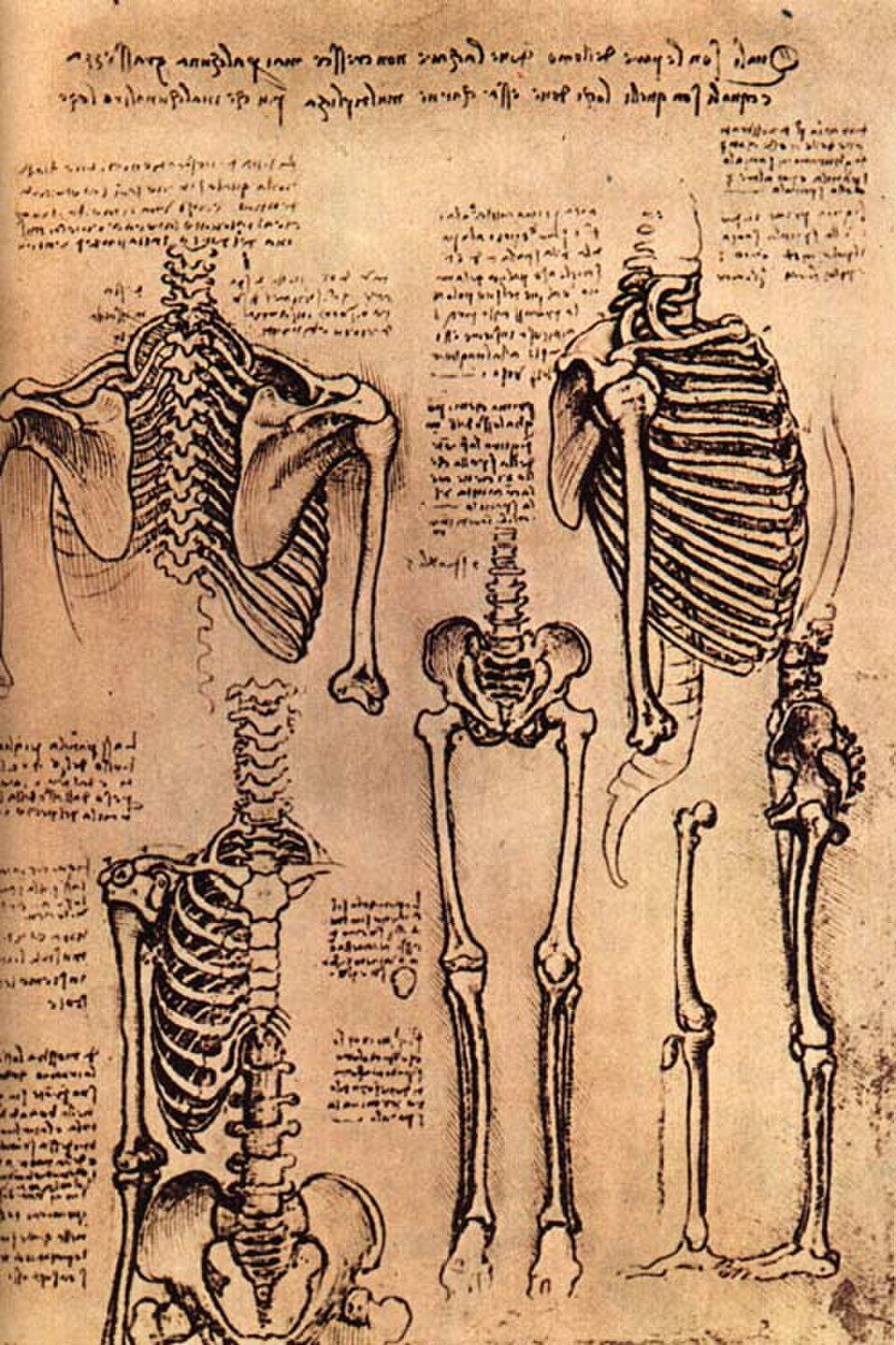
Image: Leonardo da Vinci, Public domain, via Wikimedia Commons
Is it possible for a 500-year-old painting to be so detailed that modern geologists can identify the rocks within it? According to Ann C. Pizzorusso (1996), the answer is yes.
Pizzorusso describes Leonardo da Vinci as a careful observer of the natural world. In her article, The Authenticity of the Virgin of the Rocks, she describes how Leonardo carried a small notebook with him during his many travels. He would pause to sketch whatever caught his eye, including moving water, leaves tumbling through air, and interestingly shaped rocks. The artist in Leonardo focused on beauty, while the scientist in him insisted on accuracy. (Pizzorusso, 1996, p. 197).
As mentioned in previous articles, Leonardo petitioned Ludovico Sforza for the opportunity to work as a court engineer and artist. During his extended stay in Milan, he became fascinated with fossils and the unique geology found in the nearby mountains (Pizzorusso, 1996). Many of his observations were radical for his time but are now supported by modern science. (Baucon, 2010).
Pizzorusso (1996) describes the painting The Virgin of the Rocks as a “geological tour de force” (p. 197). In the painting, Leonardo depicts multiple types of rocks, including sedimentary and igneous. The rocks are depicted with remarkable accuracy. Layers of sandstone are interspersed with harder rock and covered again by additional sediment. Leonardo’s attention to detail included an obsessive focus on the appearance of the rocks, including signs of weathering, different heights, and textures. The sandstone entrance to a cave appears smooth while jagged rocks line the pinnacles.
Leonardo was not satisfied with only accurately representing the geological features. Pizzorusso (1996) explained that Leonardo also ensured that local flora was included with meticulous accuracy. Plants requiring more light were drawn away from the rock shelves, and plants thriving in shade were positioned in spots without direct sunlight.
Perhaps most interesting is that Leonardo da Vinci’s fascination with realism has created a historical debate in the art world. There are two known copies of The Virgin of the Rocks. One is housed at the Louvre in Paris, while the other is displayed at the National Gallery in London. Both are attributed to Leonardo. However, some scholars, including Ann C. Pizzorusso (1996), argue that the details of the rocks are so dissimilar that they question whether both paintings are actually by the same artist. Many art historians, however, continue to attribute most of the painting to Leonardo, often with assistance from his workshop.
In our next article, we’ll look more closely at how Leonardo’s scientific observations shaped his paintings beyond The Virgin of the Rocks.
Further Reading
Baucon, A. (2010). Leonardo da Vinci, the founding father of
ichnology. PALAIOS, 25(5–6), 361–367.
Pizzorusso, A. C. (1996). Leonardo’s geology: The authenticity of
the Virgin of the Rocks. Leonardo, 29(3), 197–200.


Comments